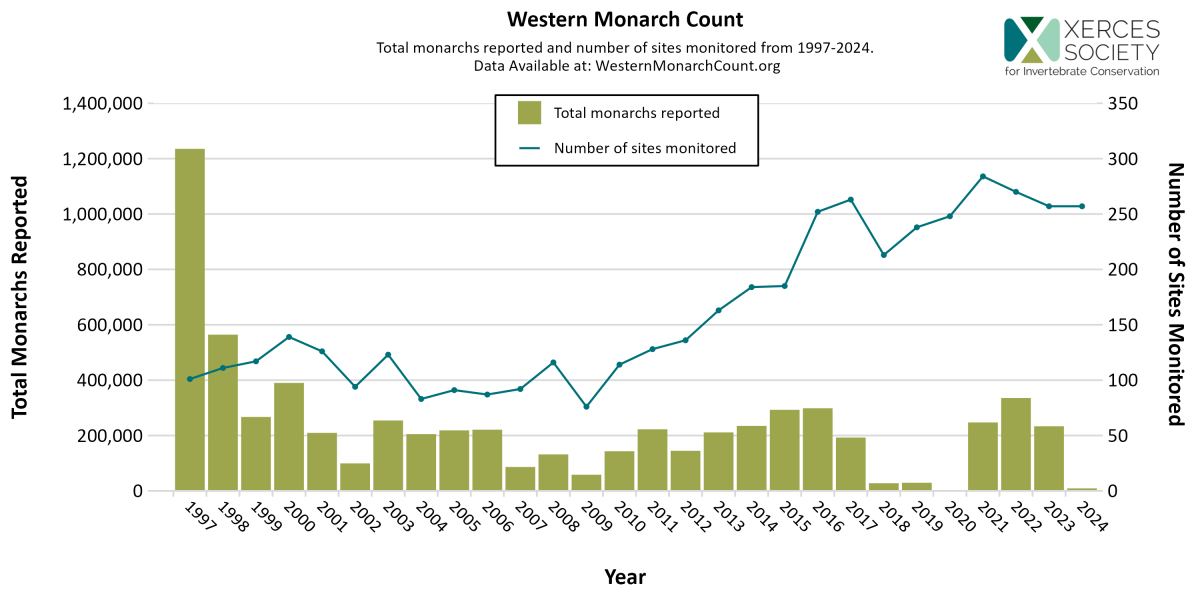
The Western Monarch population is less than 1% of what it was in the 1980s. The species continues to be threatened due to the stressors of climate change, habitat loss, and pesticides.
During winter, monarchs roost in groves of tall trees which offer protection from environmental factors such as wind, rain, cold temperatures, and sun exposure. Monarchs are highly mobile during the overwintering season and use roosting habitat as a network across landscapes— arriving and departing sites based on available suitable habitat and microclimate conditions. The graph to the right illustrates the decline in the number of monarchs reported during overwintering months.
Ventura and Santa Barbara County have an exceptional number of well-known, historically used overwintering monarch sites. According to the Xerces Society for Invertebrate Conservation, many of these sites are classified in the top 50 important California sites! Restoration is crucial for these overwintering habitats to help preserve this iconic species for many generations to come.
Check out this article on improving overwintering habitat for western monarch butterflies in Ventura and Santa Barbara Counties!
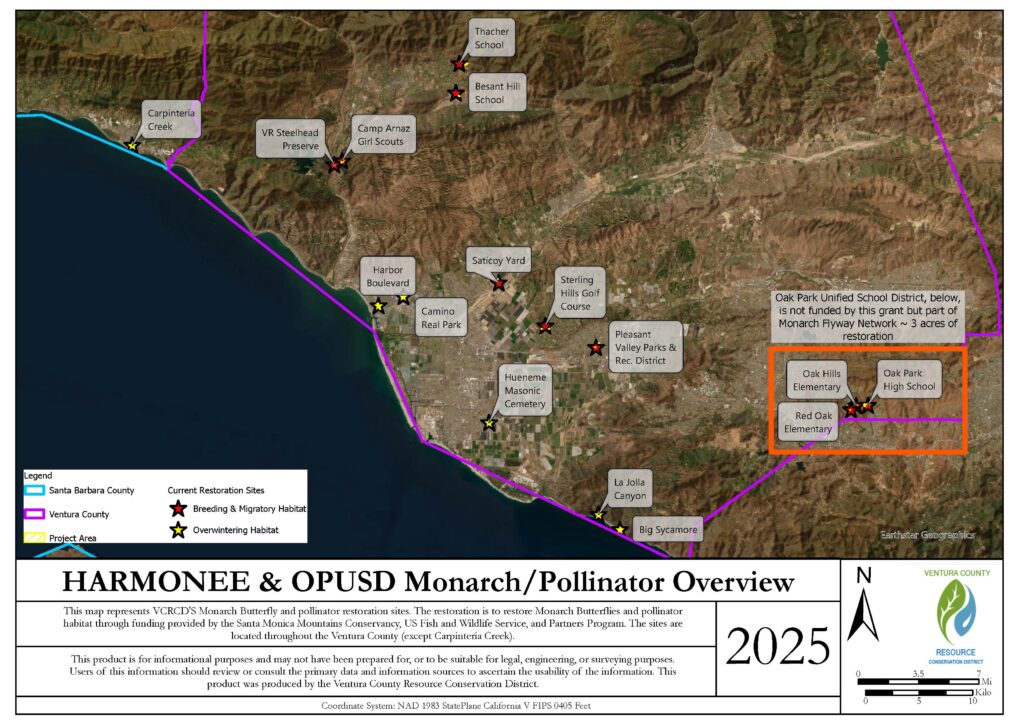
The VCRCD, in partnership with the State Wildlife Conservation Board, the US Fish and Wildlife Service, and the California Association of RCDs, is implementing various projects focused on enhancing overwintering and breeding and migratory habitat for Monarchs and other pollinators in Ventura County.
Specifically, the Habitat Assessments and Restoration for Monarchs – Overstory and Nectar Enhancement and Expansion Project (HARMONEE) and Oak Park Unified School District (OPUSD) are strategic collaborative efforts to expand, improve, and connect essential open space throughout Ventura and southern Santa Barbara Counties for the benefit of monarch butterflies and other native pollinators.
Subscribe to our Pollinator Alerts network to receive timely and relevant updates about monarch butterflies and other beneficial pollinators. Click here to join and read past alerts!
Pollinator gardens help wildlife, support other plants, save water, and bring year-round flowers to your yard! To determine the best suited plant species for your area, visit your local botanic garden or our California Native Plant Gallery!
You can also check out our Pollinator Garden Brochure.
The Western Monarch Count (WMC) is a community-powered effort to track the status of migratory western monarchs & their overwintering habitat. As a WMC participant, you have the opportunity to survey one or more western monarch overwintering sites during the annual fall and winter monitoring periods.
To learn more, visit the Western Monarch Count Volunteer Information page.
To learn more about Monarchs and pollinators, visit our Pollinator Education Resources page!
We offer several planting and weeding events throughout the year!